Insights
The Energy Footprint of Room Displays:
iPad vs Dedicated Panels
A balanced look at the energy and carbon footprint of room displays — iPad power draw vs PoE panels, embodied carbon, reuse, and end-of-life e-waste.
Short answer: The energy a room display uses while running is small — a few watts, whether it's an iPad or a dedicated panel. The bigger sustainability lever is embodied carbon: the emissions from manufacturing the device in the first place. Reusing an iPad you already own almost always beats manufacturing a brand-new panel, because you avoid making a whole new device.
Room-display sustainability discussions tend to fixate on running power ("how many watts?") when the manufacturing footprint usually dwarfs it over a device's life. Let's look at both honestly, with reasonable estimates rather than invented precision.
Two kinds of footprint: operational vs embodied
Any electronic device has two carbon footprints:
- Operational — the electricity it draws while it runs, day after day.
- Embodied — the emissions baked in during mining, manufacturing, and shipping, before it's ever switched on.
For low-power, always-on devices like a room display, embodied carbon typically dominates over a multi-year life. That single fact should shape most of your decision, and it's the one most spec sheets ignore.
Operational power: iPad vs dedicated panel
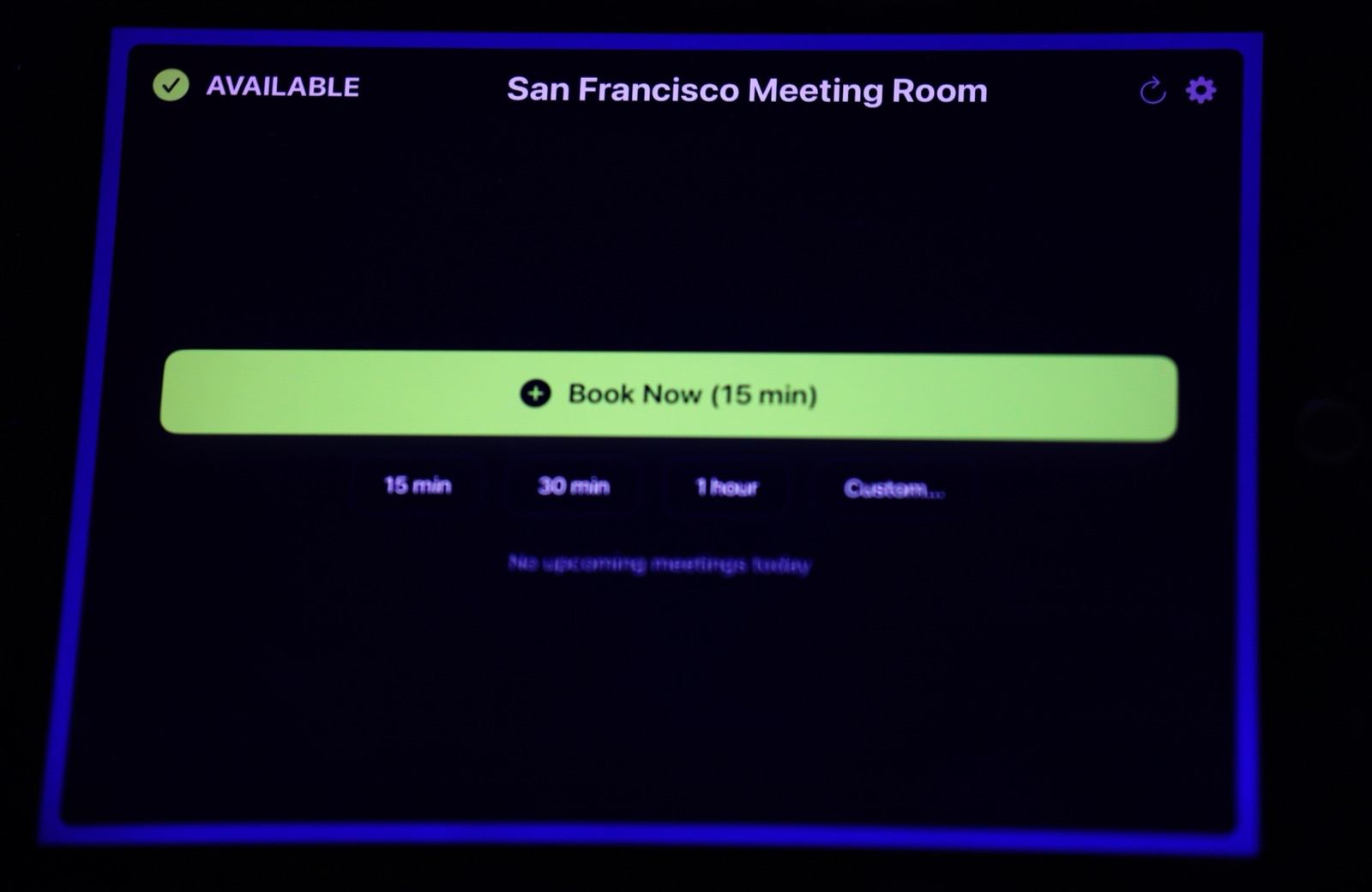
An iPad is an unusually efficient device — it was designed to sip battery. Running as a wall display, the dominant draw is the backlight.
Rough, order-of-magnitude estimates for an always-on room display:
| Device | Typical running draw | Annual energy (approx.) |
|---|---|---|
| iPad as a wall display | ~3–7 W | ~26–61 kWh/yr |
| Dedicated LCD room panel | ~5–15 W | ~44–130 kWh/yr |
| E-paper panel (idle) | very low; spikes on refresh | often lowest, but limited use case |
These are estimates, not lab figures — actual draw depends on brightness, screen size, and how often the panel wakes. The honest summary: an iPad's running power is competitive with or lower than most always-on LCD panels, and you can cut it further by dimming the backlight and using ambient/scheduled brightness.
A practical note: a wall-mounted iPad should run off permanent power rather than cycling its battery. See wall-mounted iPad power for how to wire that cleanly. Keeping the battery topped up at a steady level, rather than deep-cycling it daily, is also better for the battery's longevity.
E-paper deserves a fair mention: at idle it draws almost nothing, which is genuinely attractive. The trade-offs are refresh lag, limited or no color, and no live touch interaction — which is why it suits static signage better than an interactive booking display. We compare the experience in e-paper vs LCD iPad displays.
Embodied carbon: the number that actually moves the needle
Manufacturing a tablet or panel emits far more carbon than the device will use running for a year. Published product carbon reports for tablets commonly land in the ballpark of 100–200+ kg CO2e per device, the large majority of it from production, not use.
Put that next to operational energy: a display drawing ~5 W for a year uses roughly 44 kWh. Even on a relatively carbon-heavy grid, that's a small fraction of the device's embodied footprint. The greenest display is the one you didn't have to manufacture.
That reframes the whole comparison:
- Buying a new dedicated panel for every room means manufacturing a fleet of new devices — full embodied cost, times your room count.
- Reusing iPads you already own (or buying refurbished) means the embodied carbon was already spent years ago. You're extending the life of existing hardware instead of triggering new production.
This is the strongest sustainability argument for the iPad-plus-app approach: it's built around reuse. A one-time $99 app that runs on any iPad from 2017 onward is explicitly designed to give older, otherwise-retired devices a second job. See second life for retired company iPads.
Extending device life is a green-IT strategy
Because keeping a device in service avoids manufacturing a replacement, longevity is a sustainability feature:
- The Room Display supports iOS 15+, so 2017-era iPads still work — a long usable tail rather than forcing an upgrade.
- No subscription means there's no commercial pressure to churn hardware to keep a contract "worth it."
- A dedicated panel that's discontinued or loses cloud support becomes e-waste; a general-purpose iPad can be redeployed elsewhere afterward.
End-of-life: e-waste
When a device finally retires, the questions are: can it be reused, and can it be recycled?
- A general-purpose iPad has resale and reuse value — it can move to another role, be sold, or be traded in and refurbished. That keeps it out of the waste stream longer.
- A purpose-built room panel has essentially one function; once it's obsolete or its cloud service ends, its reuse options are thin, and it heads to recycling sooner.
- Whatever the device, route it through a certified e-waste recycler at true end of life rather than landfill.
The reuse story favors the general-purpose device again: an iPad's optionality at end of life is broader than a single-purpose panel's.
A balanced verdict
To be fair to panels: a well-made LCD panel isn't an environmental disaster, and for some installs (outdoor, very large format, harsh environments) it's the right tool. But for a standard indoor meeting-room or shared-space display, the evidence-minded conclusion is:
- Operational power is a wash to a mild win for iPad — and controllable via brightness.
- Embodied carbon dominates the lifetime footprint, and reuse beats new manufacturing decisively.
- The iPad-plus-app model is built around reuse and longevity, which is where the real carbon savings live.
If sustainability is on your criteria list, weight embodied carbon and reuse far more heavily than the wattage on a spec sheet.
Frequently asked questions
How much power does an iPad room display use?
Roughly 3–7 watts running as an always-on wall display, or about 26–61 kWh per year — competitive with or lower than most always-on LCD panels. Dimming the backlight reduces it further.
Is an iPad greener than a dedicated room panel?
Usually, and mostly because of embodied carbon, not running power. Reusing an iPad you already own avoids manufacturing a new device entirely, which is the largest part of a display's lifetime footprint.
What's embodied carbon and why does it matter?
It's the emissions from mining, manufacturing, and shipping a device before it's ever turned on. For low-power always-on displays it typically outweighs years of running energy, so avoiding new manufacturing (by reusing hardware) saves the most.
Isn't e-paper the most energy-efficient option?
At idle, e-paper draws very little, which is a real advantage. But it has refresh lag, limited color, and weak touch interaction, so it fits static signage better than an interactive booking display.
How does reusing old iPads help sustainability?
It extends the life of hardware whose embodied carbon was already spent, avoids manufacturing a new panel, and delays e-waste. The Room Display supports iPads from 2017 (iOS 15+) specifically to enable that reuse.
Related guides
- Second life for retired company iPads
- E-paper vs LCD iPad displays
- Panel vs tablet vs app: total cost of ownership